Owning a personal vehicle makes daily travel easier and helps manage work and family responsibilities more efficiently. For many individuals, a two-wheeler like a scooter or motorcycle provides affordable and convenient mobility. Since paying the full amount upfront may not always be possible, financing becomes a practical option to manage the purchase without affecting savings.
Many applicants opt for a loan on two wheeler to support their transportation needs. However, lenders review several key factors before approving the loan, such as income stability, employment type, credit history, and required documentation. A clear understanding of these factors can help applicants prepare better and improve their chances of approval.
Let’s explore the key factors that influence approval and support better financial planning for everyday needs.
Key Elements Determining Your Loan on Two Wheeler Success
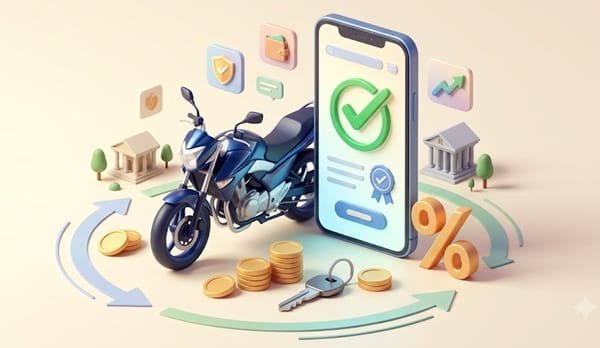
Lenders evaluate a variety of personal and economic parameters before deciding to approve a vehicle loan application. Understanding these underlying evaluation categories can help prospective borrowers improve their eligibility profile significantly.
1. The Credit Score of the Applicant
A credit score is one of the primary filters used by financial institutions during evaluation. This three-digit number summarises past borrowing behaviour, showing how well an individual has managed credit cards or previous debts. A higher score indicates disciplined repayment habits, which build trust with the financial institution.
Maintaining a clean credit history free from defaults or delayed payments improves the probability of a smooth application process for a loan on two wheeler. Individuals with lower scores or no credit history may face closer inspection, higher interest rates, or a requirement for a co-applicant to reduce lender risk. It is advisable to review credit reports periodically to rectify inaccuracies that might impact evaluation outcomes.
2. Income Stability and Employment Profile
Lenders need assurance that a borrower possesses the financial capacity to clear monthly instalments regularly. To verify this capability, financial institutions evaluate the income stability, employment type, and work history of the applicant. Salaried individuals with steady jobs in reputed firms or self-employed professionals with stable businesses are generally viewed favourably.
A consistent income stream reduces the risk of missed payments over the tenure. When checking eligibility for a loan on two wheeler, applicants who provide clear proof of steady earnings, such as salary slips or tax returns, demonstrate a reliable repayment capacity. Lenders often look for a minimum period of continuous employment to confirm this stability.
3. Existing Debt-to-Income Ratio
Even with a high income, existing financial commitments can influence a lender’s decision. The debt-to-income ratio measures the percentage of an applicant’s monthly earnings that goes toward paying off existing liabilities. If a large portion of income is already committed to other obligations, the capacity to take on new credit decreases.
Financial institutions prefer applicants whose total monthly debts consume less than a specific portion of their earnings. Keeping existing liabilities low before applying for a loan on two wheeler helps ensure that the new monthly instalments will not strain the household budget. Clearing small outstanding debts beforehand can significantly improve this ratio.
4. Accuracy of Documentation
Providing complete and accurate documentation is critical for the verification process. Lenders require valid identity proof, address proof, income verification, and banking statements to validate the information provided in the application form.
Any mismatch in names, signatures, or addresses can lead to delays or rejection. Submitting clear, verifiable paperwork helps financial institutions complete their background checks smoothly, facilitating a straightforward path toward securing a loan on two wheeler. Organising these files in advance prevents unnecessary administrative hurdles during processing.
5. Selected Vehicle Model and Specification
The type of vehicle chosen also influences the evaluation process. Lenders consider the resale value, market demand, and maintenance profile of the specific motorcycle or scooter model. Popular, mass-market models from established brands tend to have predictable depreciation rates and strong resale markets.
Financing standard vehicles is often more straightforward because the asset holds reliable value over time. When assessing a loan on two wheeler, financial institutions utilise the vehicle itself as collateral, making its market reputation a relevant factor in the final decision. High-end or niche models might require alternative financing terms.
Choose Structured Credit for Reliable Commuting
Securing financing involves multiple variables, from credit history and income proof to documentation accuracy and down payment choices. Evaluating these aspects in advance helps applicants present a stronger profile to financial institutions.
A well-planned application process leads to manageable repayment schedules that protect personal financial health while enabling the acquisition of a personal vehicle. Understanding your budget and selecting a vehicle that matches everyday needs ensures long-term utility.
Financial institutions like Muthoot FinCorp can help eligible borrowers explore structured funding for practical business and family requirements. By preparing the required documentation and maintaining a stable financial profile, individuals can approach a loan on two wheeler with confidence and achieve independent mobility.