
Aluminium windows are widely used in Indian homes, offices, commercial buildings and high-rise projects. Their strength, light weight, corrosion resistance and design flexibility make them suitable for many applications. However, the performance of an aluminium window depends greatly on the alloy used for its frame. Choosing the right grade affects strength, extrusion quality, durability, finish and overall service life.
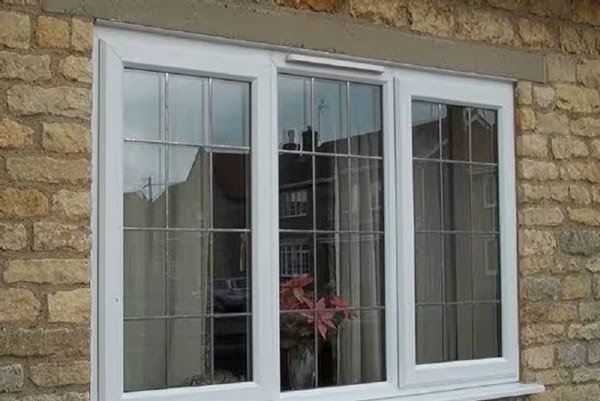
For most architectural window frames, 6000-series aluminium alloys are preferred because they balance strength, corrosion resistance, workability and extrudability. Among these, 6063 is widely used for architectural extrusions, while 6061 is considered where higher structural strength is required. The best choice depends on window design, loading conditions, profile shape and project requirements.
Why Alloy Selection Matters
Aluminium is not normally used in its pure form for window frames. Small quantities of elements such as magnesium and silicon are added to improve mechanical and manufacturing properties. Different alloy compositions produce different combinations of strength, hardness, corrosion resistance and extrusion behaviour.
A window profile must be strong enough to support its own weight, glazing, hardware and operating forces. It may also need to resist wind pressure, suction and repeated opening and closing. At the same time, the alloy must be easy to extrude into accurate hollow and intricate sections.
Why 6000-Series Alloys Are Popular
The 6000 series contains aluminium, magnesium and silicon as its principal alloying elements. These alloys can be heat treated and are particularly suitable for extrusion.
This combination makes them attractive for architectural applications. They can produce profiles with smooth surfaces, good dimensional accuracy and useful mechanical strength. They also respond well to common finishing processes such as anodising and powder coating.
For these reasons, 6000-series alloys are widely used for aluminium doors, windows, curtain walls and other building components.
Is 6063 the Best Alloy for Windows?
For conventional architectural window profiles, 6063 is often the most suitable choice. It is highly extrudable, allowing manufacturers to produce complex profiles with relatively thin walls and attractive surface finishes.
Its good corrosion resistance is another advantage for building applications. It also provides a suitable balance between strength and appearance, especially when profiles are anodised or powder coated.
6063 is therefore widely used for residential windows, office buildings, commercial projects and many standard aluminium framing systems.
However, calling 6063 universally “the best” would be misleading. A window exposed to high loads may require a stronger alloy or different temper. Profile design is important. A well-designed 6063 profile can perform better than an inadequately designed stronger alloy.
Where 6061 May Be Better
6061 is another important 6000-series alloy. Compared with 6063, it is generally selected when higher mechanical strength is more important than maximum extrusion ease and surface appearance.
It can be useful for structural components, heavy-duty framing and demanding applications. For certain large windows or specialised systems, engineers may consider 6061 when calculations show that additional strength is needed.
However, 6061 is not automatically preferable for ordinary windows. Its extrusion characteristics and finishing behaviour can make 6063 more convenient for architectural profiles.
The Importance of Temper
Alloy grade alone does not tell the complete story. The temper designation indicates how the material has been processed to achieve its final mechanical properties.
For example, 6063-T5 and 6063-T6 have different mechanical performance. Heat treatment and ageing can increase strength, while temper affects application suitability.
Window manufacturers should therefore specify both the alloy and appropriate temper rather than simply stating “6063 aluminium.”
Strength Versus Extrudability
One of the biggest considerations in window-frame manufacturing is the balance between strength and extrudability.
A highly extrudable alloy allows manufacturers to create complicated sections efficiently and with good surface quality. This is important because modern window systems contain chambers, grooves, drainage paths, glazing pockets and hardware channels.
A stronger alloy can provide better resistance to mechanical loads, but if it is harder to extrude into the required shape, manufacturing may become more difficult or expensive.
The best alloy is the one that provides adequate structural performance while remaining practical for extrusion.
Corrosion Resistance and Surface Finish
Windows face rain, humidity, pollution, sunlight and temperature changes. Aluminium naturally develops an oxide layer that protects against corrosion, while anodising or powder coating adds protection and appearance.
6000-series architectural alloys generally offer good corrosion resistance. However, the final performance also depends on alloy composition, surface preparation, coating quality and environmental conditions.
For coastal or industrial environments, manufacturers should consider the complete material and finishing specification rather than relying only on the alloy number.
What About 6060 Aluminium?
6060 is another 6000-series alloy used for architectural extrusion in some markets. It offers good extrudability and surface finish and can be suitable for profiles where moderate mechanical performance is sufficient.
Its availability can vary by manufacturer and market. In India, buyers should follow the alloy grades specified by the system designer or project engineer rather than selecting a grade solely because it is common internationally.
How to Choose the Right Alloy
The correct alloy should be selected according to the complete window system. Important factors include window dimensions, profile geometry, glass weight, wind loads, building height, opening type, hardware, exposure conditions and required service life.
For ordinary architectural applications, 6063 is often an excellent starting point. Where structural demands are higher, 6061 or another specified alloy may be considered after engineering evaluation.
Buyers should request material documentation and confirm the alloy and temper supplied. Consistent composition and mechanical properties support reliable production.
Conclusion
For most standard architectural aluminium windows, 6063 is generally one of the best-suited alloy grades because it combines excellent extrudability, good corrosion resistance, attractive surface finishing and adequate strength. It is particularly suitable for detailed architectural profiles.
However, there is no single aluminium alloy that is best for every window. 6061 can be more appropriate for applications requiring greater mechanical strength, while other 6000-series grades may suit specialised designs.
Ultimately, alloy selection should be based on engineering requirements rather than the alloy number alone. The combination of alloy, temper, profile geometry, glazing, hardware, finish and installation determines window safety, durability and performance.