
Aluminium windows are common in Indian homes, offices, commercial buildings and high-rise projects. But where does the aluminium used to make these frames actually come from? The answer involves a supply chain beginning with bauxite mining and continuing through alumina refining, aluminium smelting, extrusion and fabrication.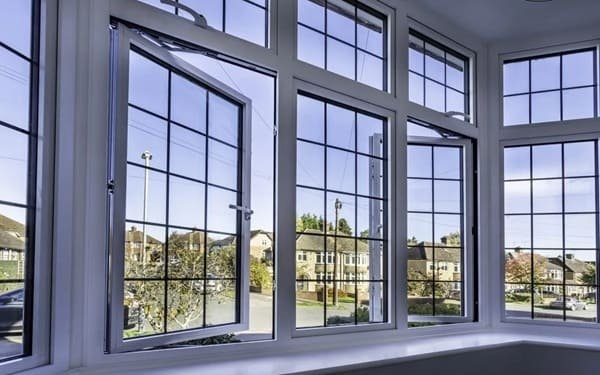
India has a significant domestic aluminium industry supported by substantial bauxite resources. Odisha is especially important, holding the largest share of India’s bauxite reserves. More than 80% of India’s bauxite reserves and 75% of its resources are metallurgical grade, making them suitable for producing alumina and aluminium. This domestic resource base allows much of the material required by India’s aluminium industry to be sourced within the country.
From Bauxite to Aluminium
Raw aluminium does not come directly from a mine. Bauxite is the primary ore from which aluminium is produced. The first stage is refining bauxite into alumina, or aluminium oxide. Alumina is then sent to smelters, where it is converted into primary aluminium metal through an electrolytic process.
A typical supply chain is: bauxite mine → alumina refinery → aluminium smelter → billet → extrusion plant → window fabricator → finished window.
Odisha: A Major Source of Bauxite
Odisha is at the centre of India’s aluminium raw-material ecosystem. Government data shows that the state accounts for more than 63% of India’s bauxite reserves. NALCO operates captive bauxite mines at Panchpatmali Hills in Koraput district and processes the ore at its Damanjodi alumina refinery. In FY 2025–26, NALCO reported record bauxite excavation of 77.01 lakh tonnes and 4.72 lakh tonnes of cast aluminium metal production.
Hindalco and Vedanta also have major operations connected to Odisha’s bauxite and alumina supply chain. Utkal Alumina, associated with Hindalco, operates an alumina refinery in Odisha, while Vedanta operates its Lanjigarh alumina refinery.
Major Indian Aluminium Producers
Three major names in India’s primary aluminium industry are NALCO, Hindalco Industries and Vedanta Aluminium.
Hindalco’s integrated operations include bauxite sourcing, alumina production, aluminium smelting and value-added products. Its FY 2024–25 report records 1.323 million tonnes of aluminium production in its India aluminium business.
Vedanta is another major domestic producer. Its aluminium operations include the Lanjigarh alumina refinery in Odisha and smelters at Jharsuguda in Odisha and BALCO in Chhattisgarh. In FY 2024–25, Vedanta reported 2.42 million tonnes of cast metal production.
NALCO is a government-owned producer with an integrated mining, refining and smelting operation.
How Aluminium Becomes Window Profiles
Window manufacturers normally require aluminium billets or extrusion-ready material rather than bauxite or alumina. Aluminium extrusion companies heat billets and force the softened metal through specially designed dies, creating long profiles with precise cross-sectional shapes.
After extrusion, profiles may undergo cutting, machining, powder coating or anodising before reaching a window fabricator.
Domestic Supply and Imports
Although India has a strong domestic aluminium industry, imports remain part of the broader supply chain. Companies may import bauxite, alumina, aluminium metal or other inputs depending on quality, availability, production requirements and commercial conditions.
For example, Vedanta’s Lanjigarh refinery has supplemented domestic bauxite supplies with imports.
Imports do not mean that Indian windows are manufactured from foreign aluminium. A fabricator can source billets or extrusion profiles from Indian suppliers even when some upstream inputs have an international component.
The Role of Recycled Aluminium
Another important source is recycled aluminium. Aluminium can be recycled repeatedly without losing its basic properties. Scrap generated during extrusion and fabrication can be collected, sorted, processed and remelted.
Window manufacturers and extrusion companies can use secondary aluminium alongside primary metal, depending on alloy requirements and manufacturing processes.
Recycling reduces the need for new raw materials and can lower energy requirements compared with producing aluminium from bauxite. Old window frames, construction scrap and manufacturing off-cuts can all contribute to the recycling stream.
Why Source Matters for Window Quality
The origin of aluminium is only one factor determining window quality. Alloy composition, billet quality, extrusion accuracy, heat treatment, surface finish and fabrication standards all influence the finished product.
A high-quality aluminium profile can provide good dimensional accuracy, strength and corrosion resistance, while poor processing can cause defects regardless of where the original metal was produced.
For large commercial and high-rise projects, buyers should focus on the technical specification of the aluminium profile and supplier documentation rather than assuming domestic or imported metal is automatically better.
India’s Strong Aluminium Ecosystem
India’s aluminium industry has an important advantage because the country possesses substantial bauxite resources and an established chain connecting mining, refining, smelting and downstream manufacturing.
Government initiatives increasingly focus on resource security, domestic value addition, recycling and greener aluminium production. For the window industry, this ecosystem means manufacturers can obtain aluminium profiles through a broad network of Indian producers, extrusion companies, distributors and fabricators. This supports reliable availability for projects across regions and construction segments while helping manufacturers manage changing demand and maintain production continuity efficiently.
Conclusion
India sources much of the aluminium used in window manufacturing through its domestic aluminium industry. The supply chain begins mainly with bauxite mined in states such as Odisha, followed by alumina refining and aluminium smelting. Major producers including NALCO, Hindalco and Vedanta supply primary aluminium and related products to downstream industries.
The metal is then converted into billets, extruded into architectural profiles and fabricated into finished windows. Imported materials and recycled aluminium also supplement domestic supplies.
Therefore, an aluminium window installed in an Indian building may represent a supply chain stretching from an Indian bauxite mine to a refinery, smelter, extrusion plant and finally a local fabricator. Understanding this chain helps buyers appreciate the industrial scale behind aluminium windows and the importance of responsible sourcing, quality control and recycling.